Alexey Sergeyevich Blagoveshchensky
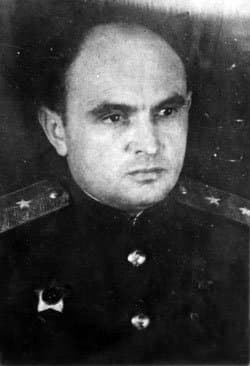
Alexey Blagoveshchensky was born on October 18, 1909, in the city of Brest-Litovsk, into a working-class family. He graduated from the Kursk Industrial and Economic College.
He joined the Red Army in 1927, completing his studies at the Leningrad Military Theoretical School and then the Borisoglebsk Military Pilot School. He served in the Far East, where he was awarded the Order of the Red Star for his success in combat training. From 1934, he worked at the Air Force Research Institute, impressing everyone with his remarkable composure in the air and virtuoso piloting skills, having a perfect knowledge of many aircraft.
Ace Pilot in China
From December 1937 to August 1938, Blagoveshchensky volunteered to fight Japanese invaders in China. As a fighter group commander, Captain Blagoveshchensky flew 73 combat missions, engaged in 11 aerial battles, personally destroying 7 enemy aircraft and participating in the destruction of over 20 in group engagements, according to his flight log. In one battle, he shot down a fighter group commander, who turned out to be a famous ace, one of the “invincible kings of the air.” As pilots joked, “he took off his crown, along with his head.” He himself was lightly wounded in his left side.
On November 14, 1938, Blagoveshchensky was awarded the title of Hero of the Soviet Union. In 1939, he attended courses at the Military Academy of the General Staff and participated in the Soviet-Finnish War of 1939-1940. He commanded an aviation brigade, organizing its work so effectively that it was recognized as one of the best in an order by the People’s Commissar of Defense. At his airfield’s command post, he organized tests of the first ground-based “Redut” radar guidance systems and installed radio stations on several I-16s, testing them in combat conditions.
Service in the Great Patriotic War
With the outbreak of the Great Patriotic War, Lieutenant General Blagoveshchensky served as Deputy Commander of the Air Force of the Far Eastern Military District. From 1942, at his personal request, he commanded the 2nd Fighter Aviation Corps. Despite commanding a large formation, he continued to fly extensively, being the first among the corps’ pilots to master new aircraft types and personally participating in combat sorties. His total combat record includes 12 enemy aircraft shot down personally and 25 in group engagements.
After the war, he engaged in flight test work. From 1950, he was head of one of the departments of the State Research Institute of the Air Force, and from 1952, director of the institute. He personally participated in testing new jet technology.
In 1956, at the international air show in England, after a brief consultation, he took off in a “Hunter” training fighter and demonstrated world-class aerobatics.
Post-Military Career and Recognitions
In 1960, he transferred to the reserve. He was awarded the Orders of Lenin (twice), the October Revolution, the Red Banner (thrice), Suvorov 2nd Class, Kutuzov 2nd Class, Bogdan Khmelnytsky 2nd Class, the Patriotic War 1st Class (twice), and the Red Star (twice).
From 1960, while in the reserve, he worked at the A.N. Tupolev Design Bureau as Deputy Head (1962-1965), Head of the Flight Test Base (1965-1975), Deputy Chief Designer (1975-1983), and Lead Designer (1984-1985).
He lived in the settlement of Chkalovsky (now part of Shchyolkovo) in the Moscow region, and later in Moscow. He died on May 24, 1994, and was buried at Troyekurovskoye Cemetery in Moscow.
ArchivoAéreo Editorial Team
A group of aviation researchers and enthusiasts dedicated to documenting and preserving global aeronautical history. All articles are reviewed to ensure historical accuracy.
Sources & Accuracy
The information presented in this technical sheet has been compiled from declassified flight manuals, historical archives, and specialized literature. While we strive for maximum accuracy, some performance data may vary depending on the specific variant or operational conditions.